Estimated Tax
Estimated tax is tax paid directly during the year in periodic installments when withholding alone is not expected to cover enough tax.
Estimated tax is tax paid directly during the year in periodic installments when Withholding alone is not expected to cover enough tax. In plain language, it is the do-it-yourself prepayment path for taxpayers whose tax is not fully collected through ordinary payroll withholding.
Why It Matters
Estimated tax matters because the tax system usually expects payments to be made during the year, not only at filing time. Taxpayers who have self-employment income, investment income, or other situations with limited withholding often need to pay attention to estimated payments.
It also matters because people sometimes assume they can simply wait until the return is due and pay everything then. In practice, timing can matter, and the payment schedule can affect whether penalties are triggered later.
Estimated Tax Compared With Withholding
| Feature | Withholding | Estimated tax |
|---|---|---|
| Who sends the payment | Employer or other payer | Taxpayer |
| Common setup point | Form W-4 or payer reporting rules | Form 1040-ES calculations and direct payments |
| Typical timing pattern | Small amounts flow out of each paycheck or payment | Installments are sent directly during the year |
| Common penalty review point | Underwithholding can still matter | Form 2210 often becomes relevant when installments fall short |
Where It Appears in a Real Tax Workflow
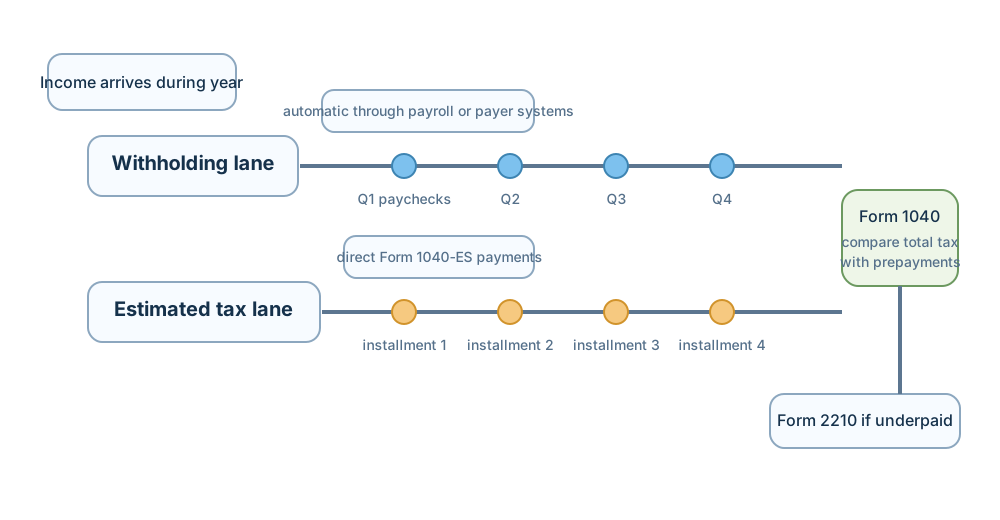
Estimated tax becomes relevant during the year, before the annual Tax Return is filed. The taxpayer uses the Form 1040-ES workflow to make periodic payments based on expected tax and later reports those payments on Form 1040. Those payments are then compared with the final Tax Liability, and Form 2210 can become relevant if the prepayment pattern was too low or too uneven.
Practical Example
A self-employed taxpayer expects income that will not have ordinary wage withholding. Instead of waiting until the return is filed, the taxpayer makes estimated payments during the year. Those payments reduce the chance of a large balance due and help keep the annual payment pattern in line with tax rules.
Common Misunderstandings and Close Contrasts
Estimated tax is not just another name for withholding. The two serve similar prepayment purposes, but withholding is collected automatically through payors, while estimated tax is paid directly by the taxpayer.
It is also different from the final return. The return later reconciles the year by comparing liability with both withholding and estimated payments.
It is also not limited to self-employment. Investment income, gig income, retirement distributions, and other low-withholding situations can all push a taxpayer into the estimated-tax workflow.
Related Terms
- Withholding
- Federal Income Tax Withholding
- Form 1040-ES
- Form 2210
- Form 1040
- Tax Liability
- Self-Employment Tax
- Underpayment Penalty
- Failure-to-File Penalty
Knowledge Check
- When does estimated tax usually become important? It becomes important when withholding alone is not expected to cover enough tax during the year.
- Why does estimated tax matter before filing time? Because the tax system generally expects tax to be paid during the year rather than only at the end.
- Which nearby concept involves tax being collected automatically through payroll or another payment system? Withholding.