Tax Bracket
A tax bracket is a range of taxable income that is taxed at a particular marginal rate under the rate schedule.
A tax bracket is a range of Taxable Income that is taxed at a particular rate under the tax schedule. In plain language, it is one slice of the taxable-income ladder, not a label that automatically applies the same rate to every dollar a taxpayer earns.
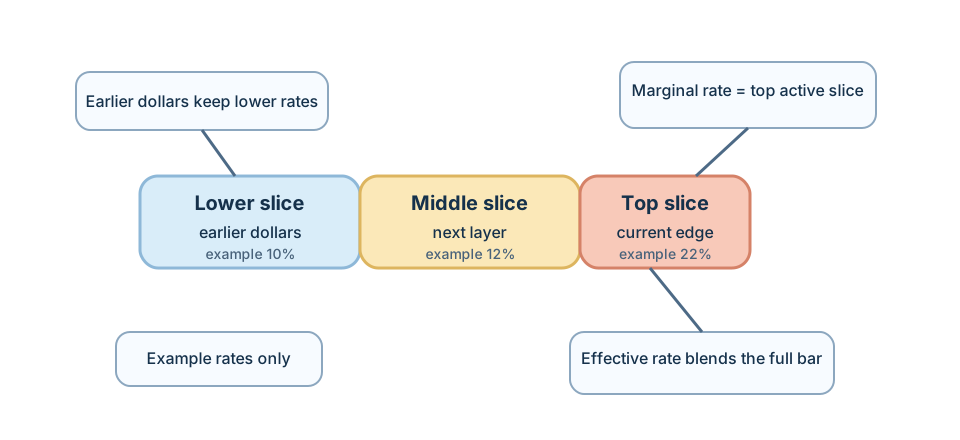
The diagram uses simple example rates only. Actual bracket thresholds and rates change by year and Filing Status, but the slice-by-slice structure is the same teaching point.
Why It Matters
Tax brackets matter because they explain how rate schedules actually work. The tax system generally taxes different layers of taxable income at different rates. Understanding brackets helps taxpayers avoid the common mistake of thinking that moving into a higher bracket means every dollar of income is suddenly taxed at that higher rate.
Tax brackets also help readers interpret how filing status, deductions, and income changes can alter the tax calculation without changing every part of it equally.
Rate Terms at a Glance
| Term | Main question it answers | What it focuses on |
|---|---|---|
| Tax bracket | Which taxable-income range has been reached? | The slice boundaries in the rate schedule |
| Marginal Tax Rate | What rate applies to the next dollar? | The top active slice |
| Effective Tax Rate | What overall burden did the return produce? | The blended result across the full calculation |
Where It Appears in a Real Tax Workflow
A bracket becomes relevant after the return has already determined taxable income. Once the taxpayer knows that figure, the applicable rate schedule can be used to compute Tax Liability. Filing status can matter here because different statuses can use different bracket thresholds.
Practical Example
A taxpayer earns more income during the year and worries that entering a higher bracket means all income will be taxed at the highest visible rate. That is usually a misunderstanding. The higher rate generally applies only to the portion of taxable income that falls within that bracket range.
Common Misunderstandings and Close Contrasts
A tax bracket is closely related to the Marginal Tax Rate, but they are not identical. The bracket is the income range. The marginal rate is the rate applied to the next dollar within the relevant range.
It is also different from the Effective Tax Rate, which looks at total tax as a share of income rather than focusing on the top slice.
Bracket labels are also not permanent universal numbers. The actual thresholds depend on the filing year and filing status, so the durable concept is the layered structure rather than any one set of annual cut points.
Related Terms
Knowledge Check
- What does a tax bracket represent? It represents a range of taxable income that is taxed at a particular rate.
- Does entering a higher bracket usually mean every dollar of income is taxed at that higher rate? No. The higher rate usually applies only to the portion of taxable income within that bracket range.
- Which related concept focuses on the rate applied to the next dollar of taxable income? Marginal Tax Rate.