Adjusted Gross Income
Adjusted gross income is gross income after certain allowed adjustments and is a key pivot point for later tax calculations.
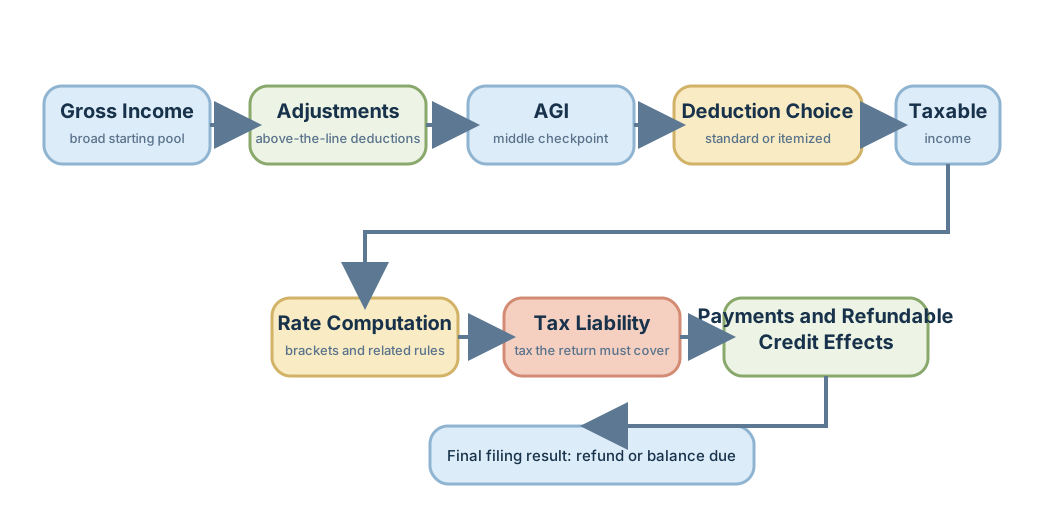
Adjusted gross income, often shortened to AGI, is gross income after certain allowed adjustments are taken into account. In plain language, it is a middle-stage number on the return: lower than Gross Income, but still earlier than Taxable Income.
Why It Matters
AGI matters because many tax rules look to it as a practical checkpoint. Eligibility for some deductions, credits, and limits can depend on where AGI lands. That makes it one of the most important anchor numbers on an individual return.
It also helps readers understand that the tax calculation is not one simple jump from income to tax owed. AGI shows that the return works in stages. First there is broad income. Then certain adjustments reduce it. Only after that does the return move toward deductions, credits, and the final liability.
AGI Compared With Nearby Checkpoints
| Checkpoint | What it answers | Where it sits in the chain |
|---|---|---|
| Gross Income | What broad income came in? | Starting pool before adjustment-stage reductions |
| Adjusted Gross Income | What is left after allowed adjustments? | Middle checkpoint before deduction choice |
| Taxable Income | What amount do the rate rules actually tax? | After the deduction stage |
| Tax Liability | What tax bill did the return produce? | After rate and related tax rules are applied |
Where It Appears in a Real Tax Workflow
AGI appears after income information is pulled together on the return, usually from forms such as Form W-2 and other supporting records. After the taxpayer accounts for the adjustments available at that stage, the return reaches AGI. From there, the return continues through the deduction stage and eventually reaches taxable income and tax liability on Form 1040.
Practical Example
A taxpayer has wages, interest income, and freelance income. That total creates gross income. The taxpayer then applies eligible adjustments that the return allows before the deduction stage. The result is adjusted gross income. That AGI is later used to determine how other parts of the return behave.
Common Misunderstandings and Close Contrasts
AGI is often confused with taxable income. The difference matters. AGI is an intermediate figure. Taxable income comes later, after the return also takes into account deductions such as the Standard Deduction or Itemized Deduction.
AGI is also not the same as gross income. Gross income is the broad starting total. AGI is that total after a narrower set of allowed adjustments has been applied.
AGI is also not itself the amount taxed. The return still has to move through the deduction stage before it reaches taxable income.
Related Terms
- Gross Income
- Modified Adjusted Gross Income
- Above-the-Line Deduction
- Self-Employed Health Insurance Deduction
- IRA Deduction
- Health Savings Account Deduction
- Taxable Income
- Tax Liability
- Standard Deduction
- Itemized Deduction
- Earned Income Tax Credit
- Form 1040
Knowledge Check
- Where does AGI sit in the overall return calculation? It comes after gross income and allowed adjustments, but before deductions and the final taxable income figure.
- Why is AGI a useful checkpoint on a return? Many later tax rules and eligibility limits use AGI as a reference point.
- What is one major difference between AGI and taxable income? Taxable income comes after deductions are applied, while AGI is reached before that deduction stage.